Situations design diary 2: Situations Cards
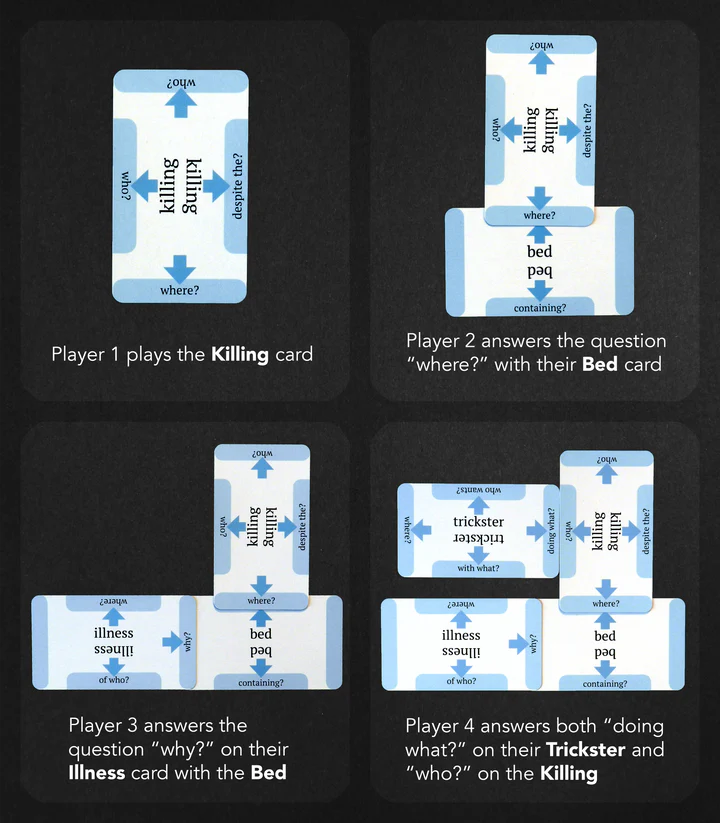
In this blog post, I will go over the process of designing the different types of cards in my game Situations's deck. For those unfamiliar, Situations is a card game where players build up a shared "situation" by playing cards, and then each player writes their own piece of flash fiction that interprets the situation into a story. You can learn a bit more about where the overall idea came from in the previous post in this series.
There are a few different types of cards in a Situations deck. The cards are mostly noun cards, which are connected together by answering the questions on the sides of the cards. There are also adjective cards, which get tucked underneath the noun cards to modify them, and two special cards ("is a" and "and," which each have their own particular mechanics).
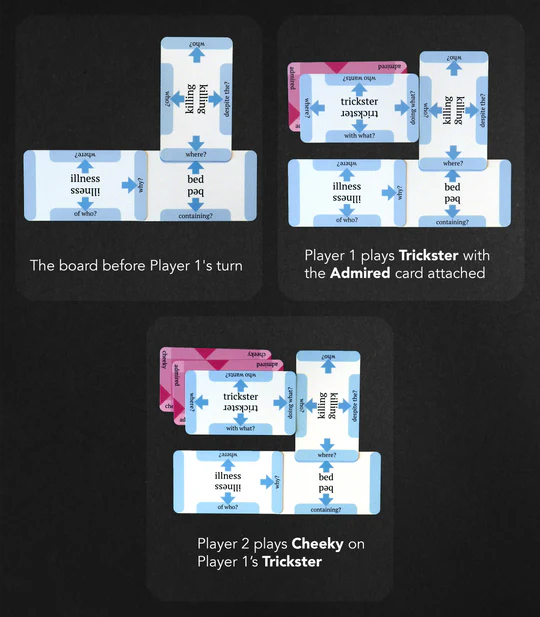
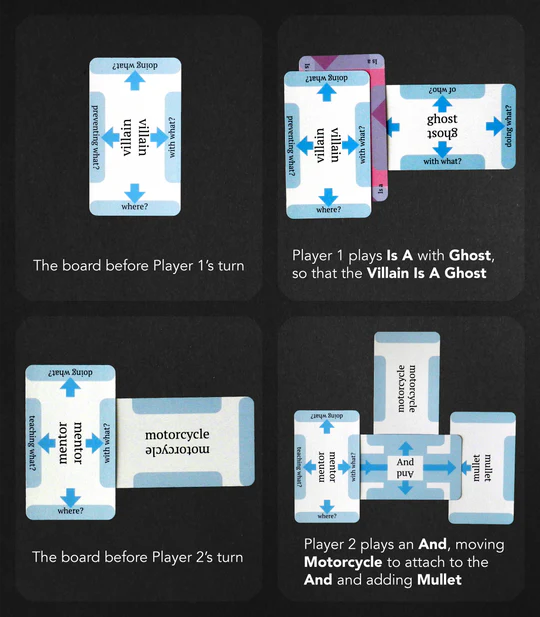
Diagrams explaining the use of adjective and special cards
Designing the Noun Cards
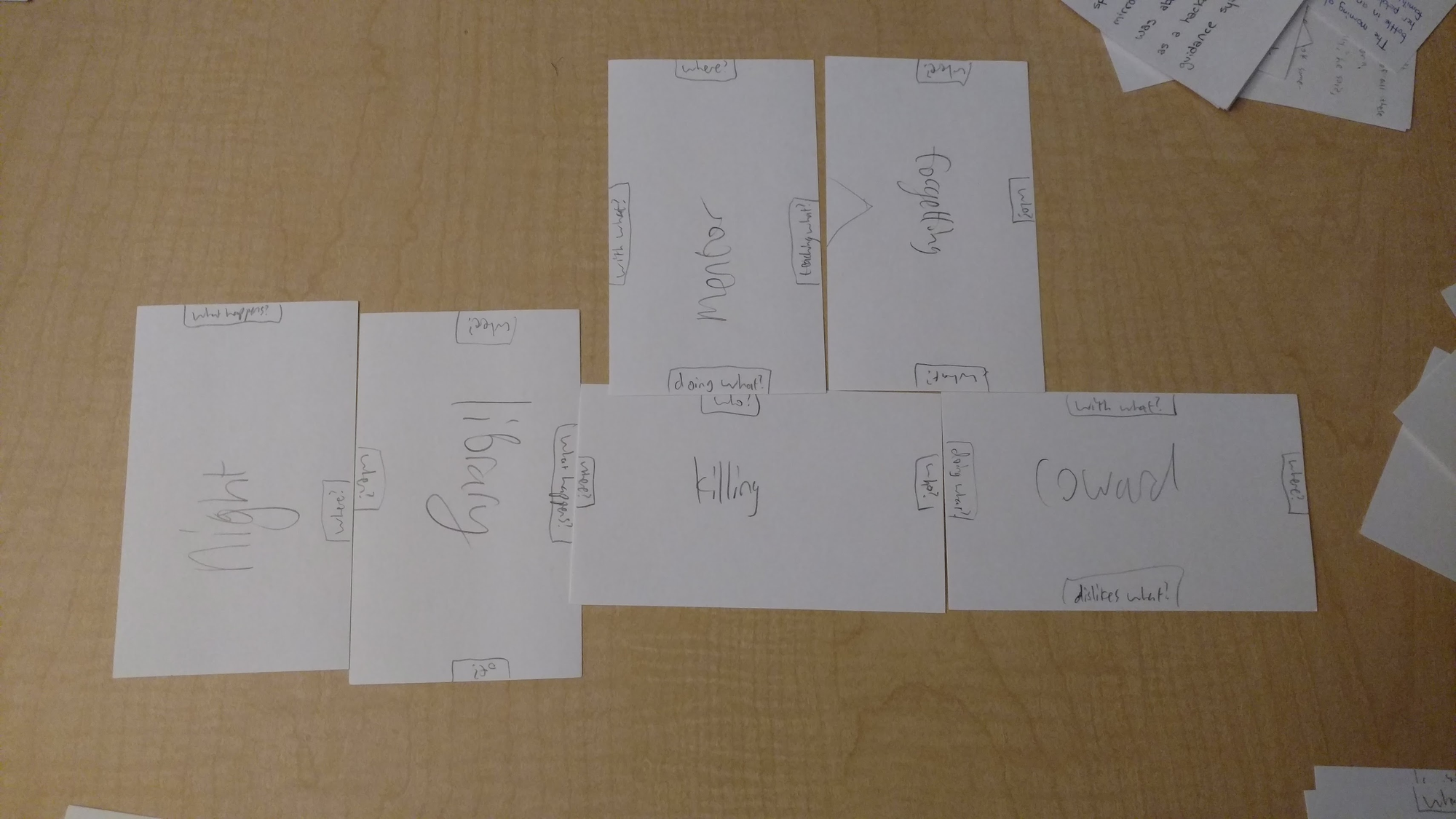
My first stab at implementing the Situations concept was inspired by dominoes. Since dominoes are joined by matching two adjacent sides, this first version of the noun cards had a relationship on each side of the card. If these relationships could be made reciprocal, then the cards could attach. If not, it wasn't a match and those cards couldn't connect that way.
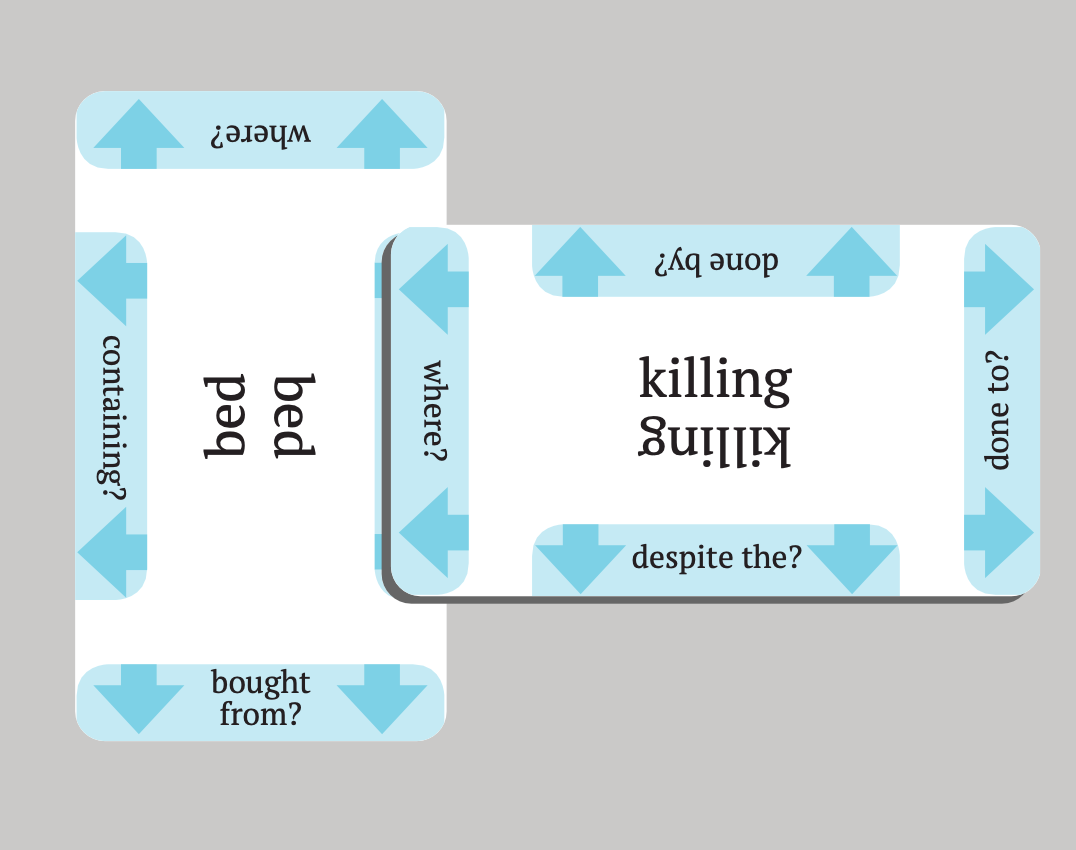
To make this more concrete, here's an example: The card Killing has a where? edge, and the card Library has a what happens? edge. These can match - "where was the killing? In the library" and "What happened in the library? A killing" both work. On the other hand, the card Coward has a Where? edge, so you might want to connect Coward to Library in the form of "Where is the coward? In the library." However, this wasn't a legal play - all four edges of Library have questions where Coward doesn't make sense as an answer, so there's nowhere where you can have a two-way match.
Since this removes some interesting and valid possibilities for connections between cards, and coming up with four questions for every noun was hard anyway, I left some sides of the cards blank - the idea is that if a side is blank then it only needs a one-way match on the other side.
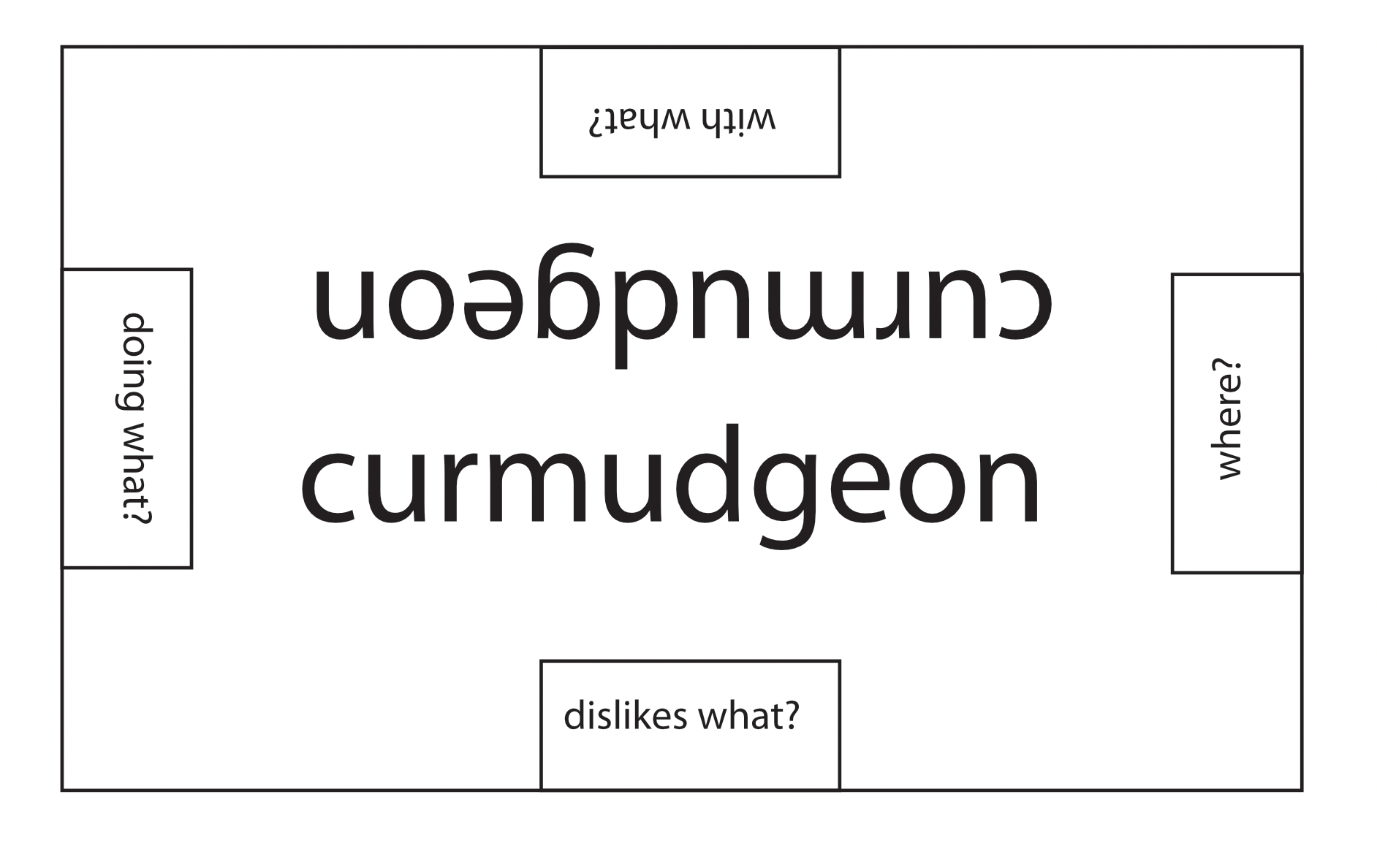
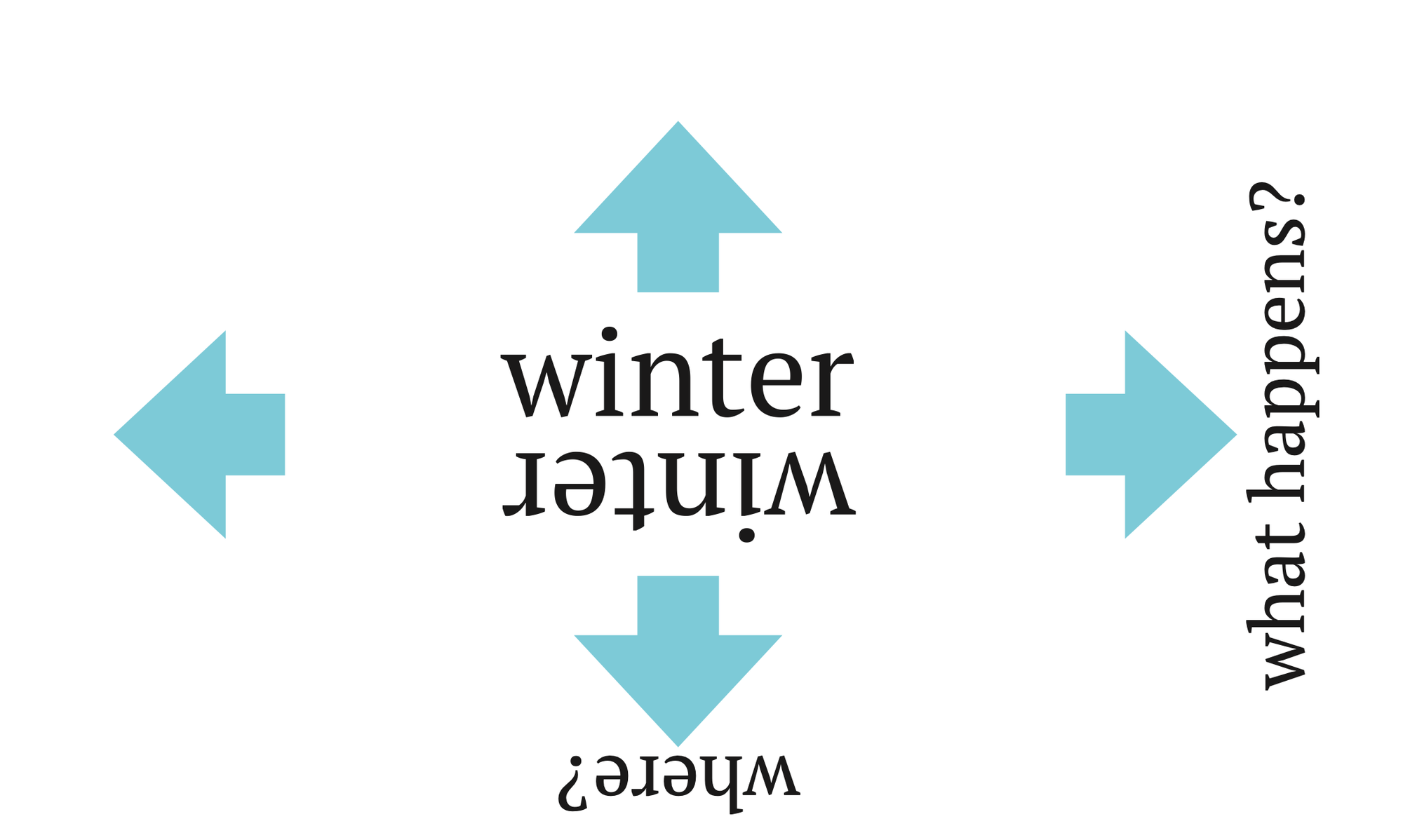
Early prototype card designs
Playtesting with this design of the cards turned up some interesting results. Players found the dominoes-like two-way matching cumbersome, which I had expected. But they found the blank card sides actually INCREASED the difficulty of matching the cards, rather than decreasing it. Players were unsure why some sides were blank and what that meant, which added more friction than even two-way matching the other edges of the cards.
To remove the friction, I opted to remove the two-way matching requirement. This would mean that having a question on every side of every card would no longer restrict the cards' utility - the more questions, the more ways to use the card, without additional questions reducing the number of "wild" edges - one change that would fix both of these points of friction.
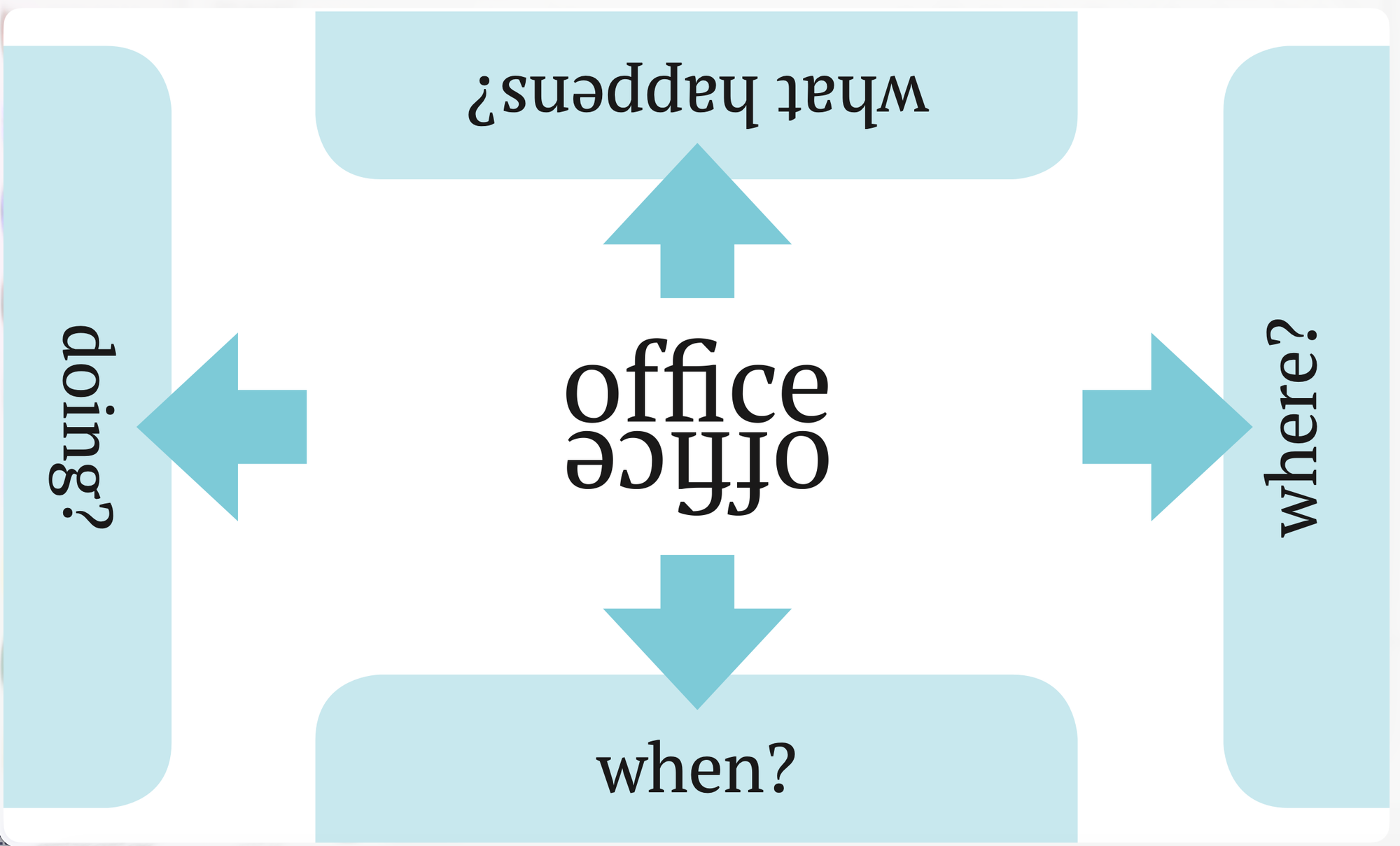
In order to make this change, though, I needed to figure out a way to visually represent a one-way connection between two cards. I realized that tucking one card under another covers one of the questions, leaving only one question showing to determine the relationship. I added highlights in the shape of the edge of a card underneath each of the questions, in order to visually complete a card tucked under another card. This acts as a visual cue for players to tuck cards under each other.
Designing the non-noun cards
Adjective cards
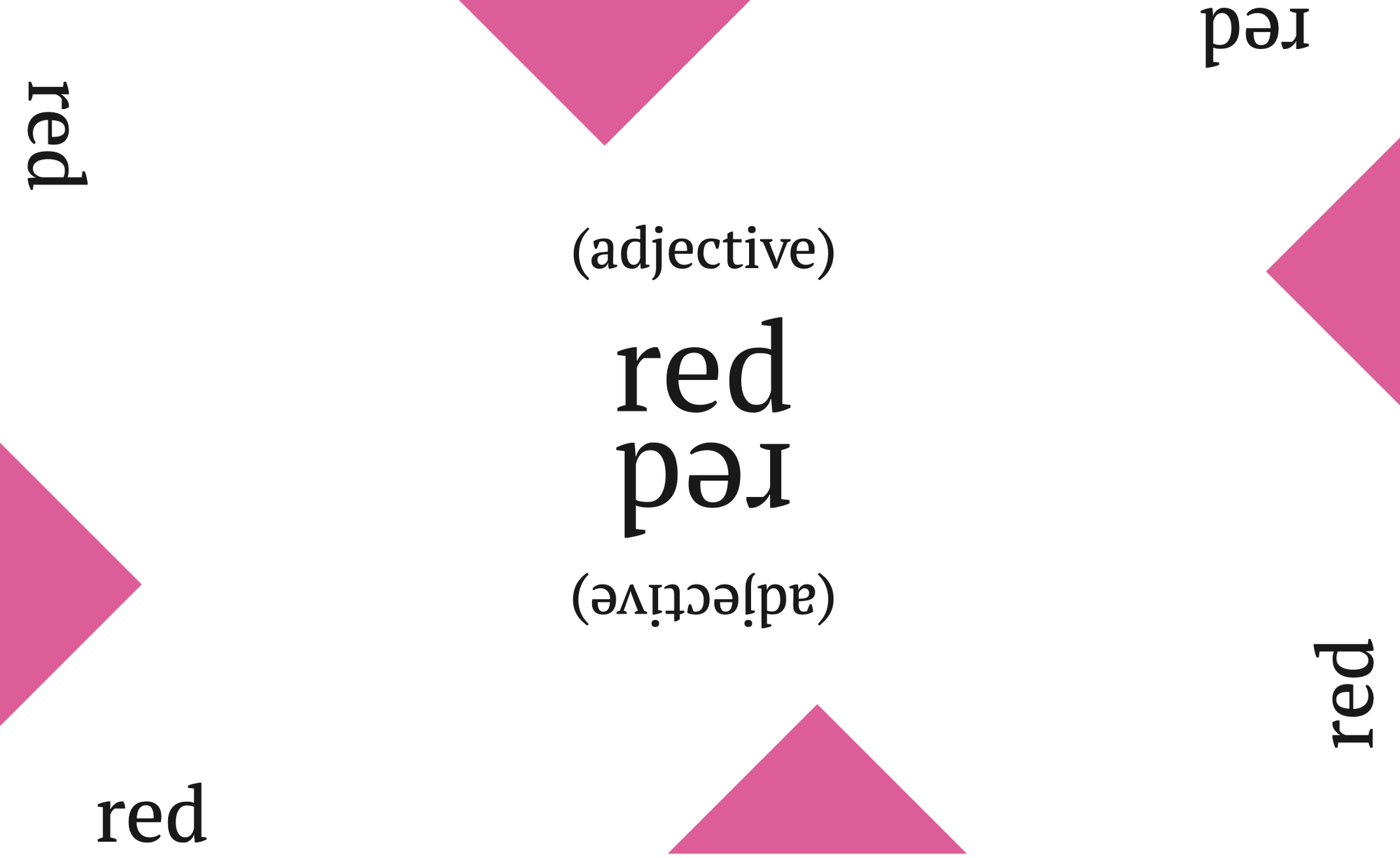
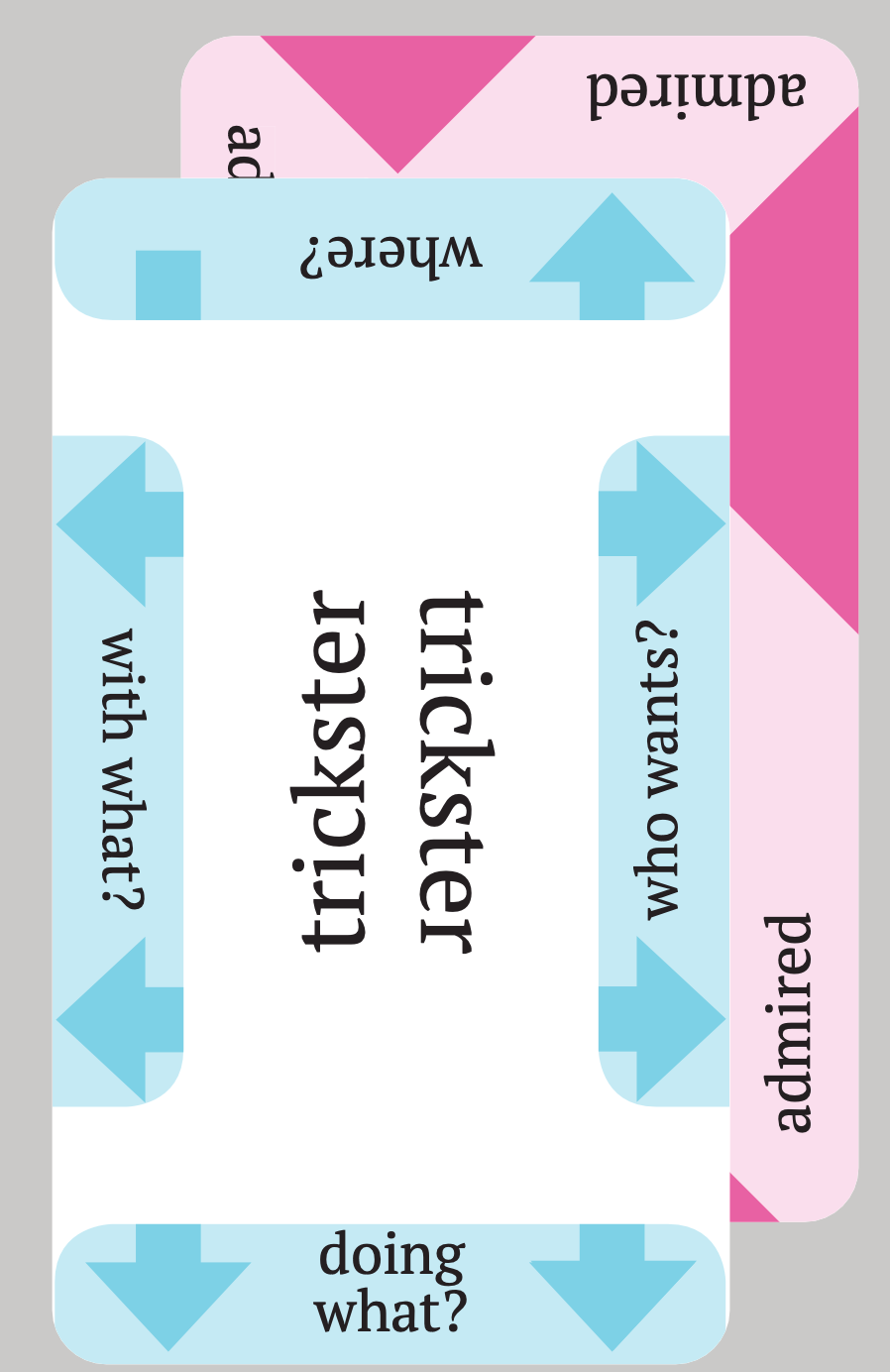
The first iteration of the adjective card design (L), an example of tucking an adjective card under a noun card from the rules (R)
Although the noun cards were clearly the core of the game, I was worried that a deck of only noun cards wouldn't be able to create an interesting and unique scenario every game. Nouns alone are the same every time, and don't have a lot of variety. In order to increase the variety of possibilities in the game and the evocativeness of the scenarios, I opted to add adjective cards to the mix. They would be tucked fully underneath the nouns with a little hanging edge to show the actual adjective - that way they wouldn't disrupt the layout of nouns and relationships.
My first instinct was that on their turn, every player should play exactly one card, so players could play either a noun OR an adjective, but not both. I noticed during playtesting that players had trouble sticking to this - they'd often want to play a noun with an adjective attached from the jump, or play multiple adjectives on a single noun. After racking my brain for a while about why this was something that players found confusing, I realized that there was no actual reason to disallow it - being able to play multiple adjectives or a noun plus some adjectives all together actually just makes the game faster and more dynamic. Objectively, this is a more complicated set of rules than my original idea - the rules in the rulebook for playing adjectives have three different cases now, rather than just a single case - but in practice during gameplay it feels so natural that players typically don't have to think about it.
Verb cards?
When first deciding on the structure of the game, I felt like there needed to be verbs in the game. A bunch of objects and their relationships doesn't make a story - there's no action! I was a little stumped on how to implement a verb card, though. How would it work?
Eventually, I realized that every action is also an event. And an event is a noun. Rather than creating a verb card "kill," I turned it into a noun card: "killing." Instead of saying "the princess kills the dragon," the game structures it as "there is a killing by the princess of the dragon." Conceptually, this communicates exactly the same thing as including verbs, but doesn't require a new type of card or additional rules.
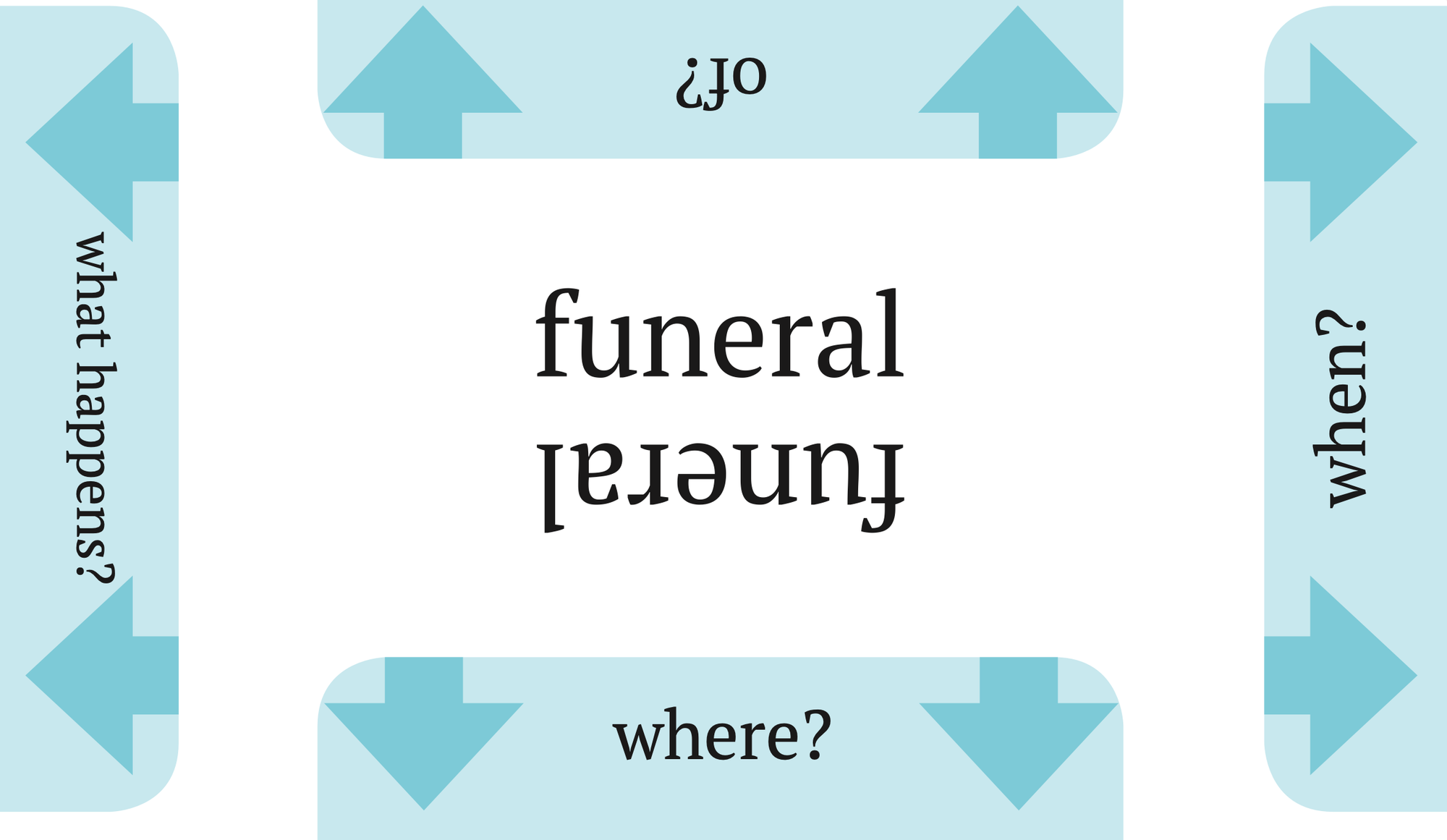
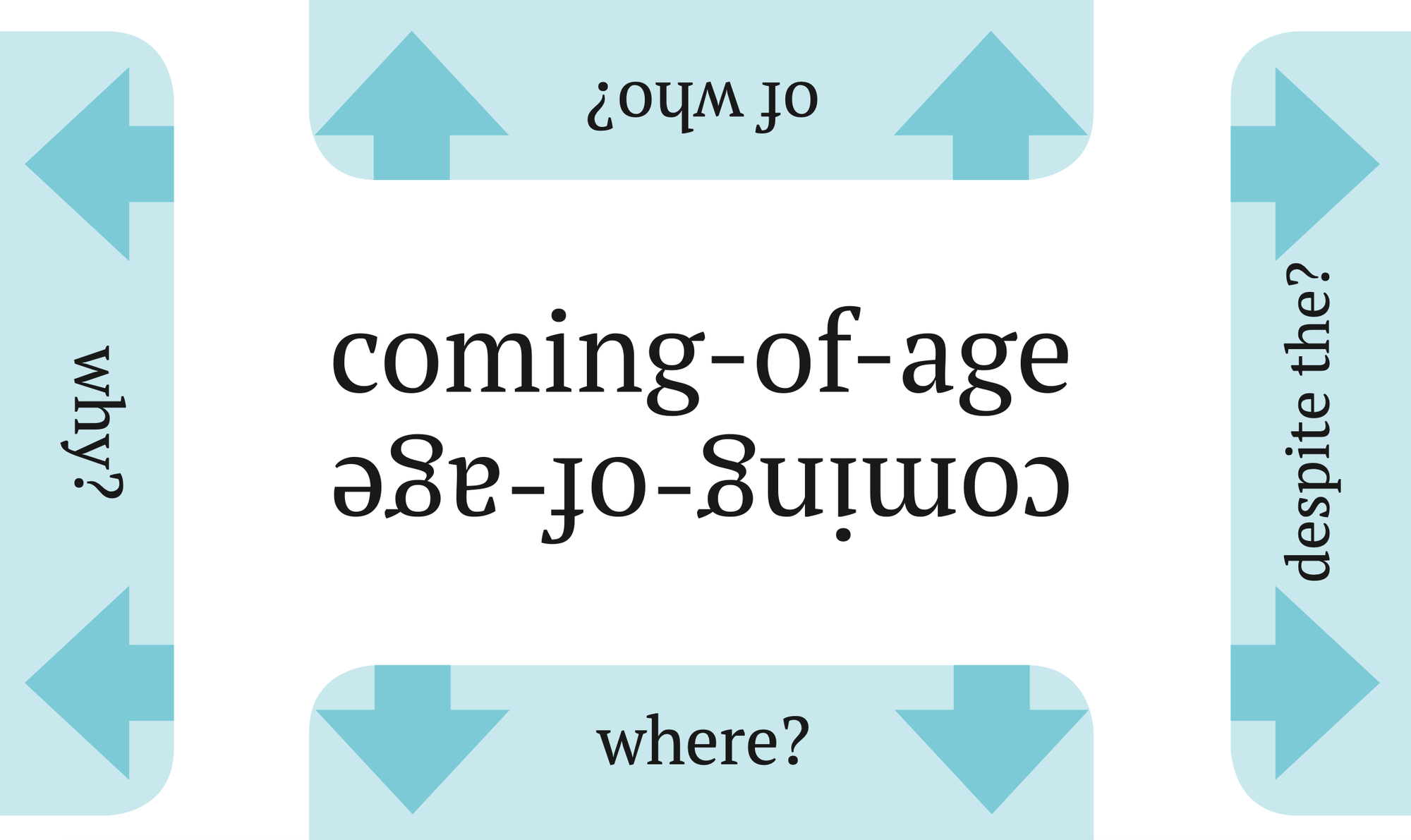
Some example noun cards representing events
But?
A series of events still doesn't quite set up a plot. There's no adversary or risk. Because of that, I initially planned to add a "but" card - "there would have been a killing BUT the knight stepped in." I was pretty stuck on how this should work, though. Eventually I realized that this was essentially just a question - "killing BUT the knight stepped in." Rather than creating a separate "but" card, I added the question "Despite the?" to most cards representing an event, setting up an opposing force.
Time
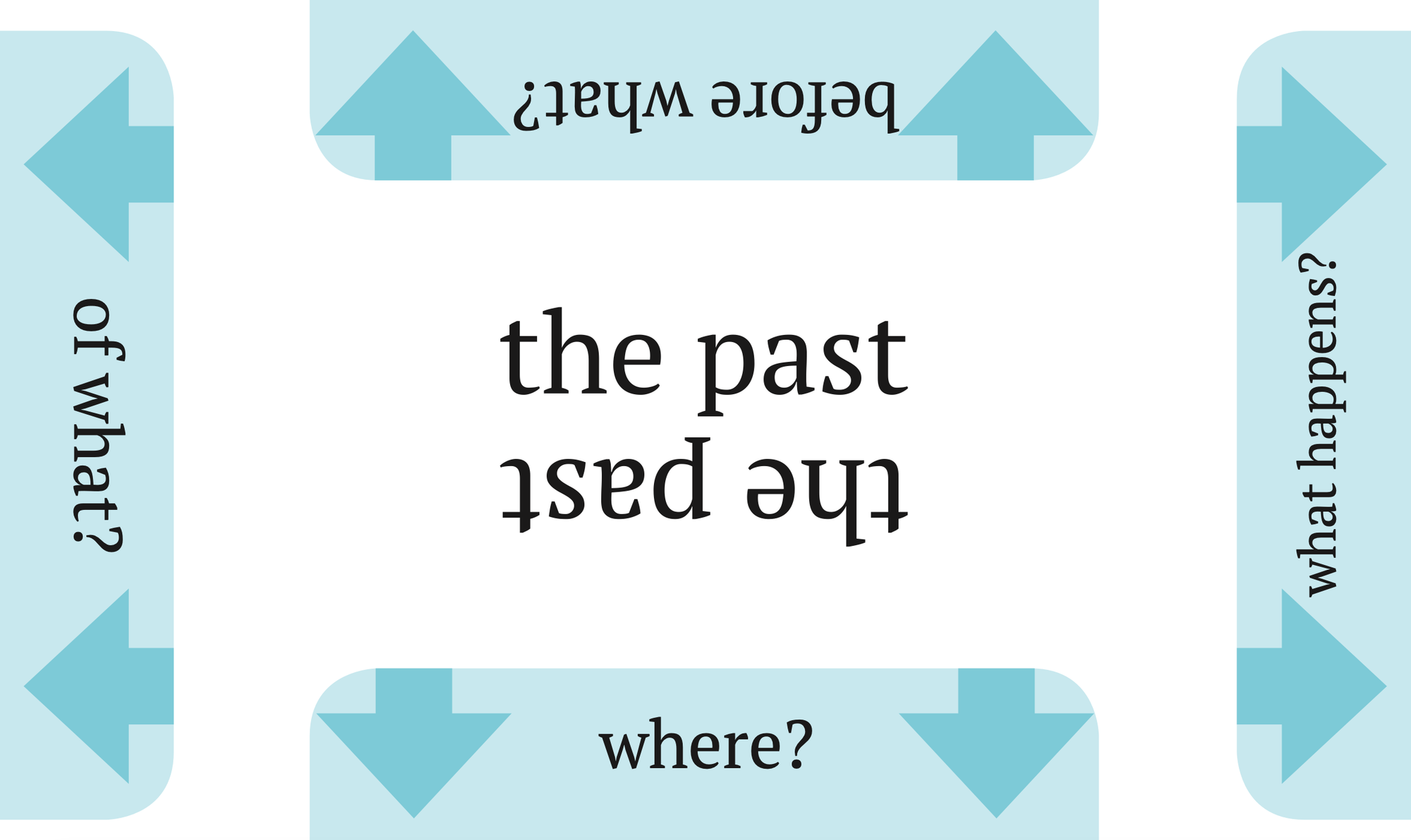
The elephant in the room in terms of treating events as nouns that are just part of the web of relationships is the arrow of time. If there are different events on different places in the board, which order did they happen in? Some ambiguity like this is good for the game, because it allows for more varied interpretations, but sometimes players pre-defining these temporal relationships can make the situation more interesting, for example by placing events in an unintuitive order. Because of this, I added three cards: "The Past," "A Day Later," and "A Year Later." Although they're not really nouns, they're noun cards anyway because from a gameplay perspective they connect to other things with relationships the same way that nouns do.
Special Cards
Is A
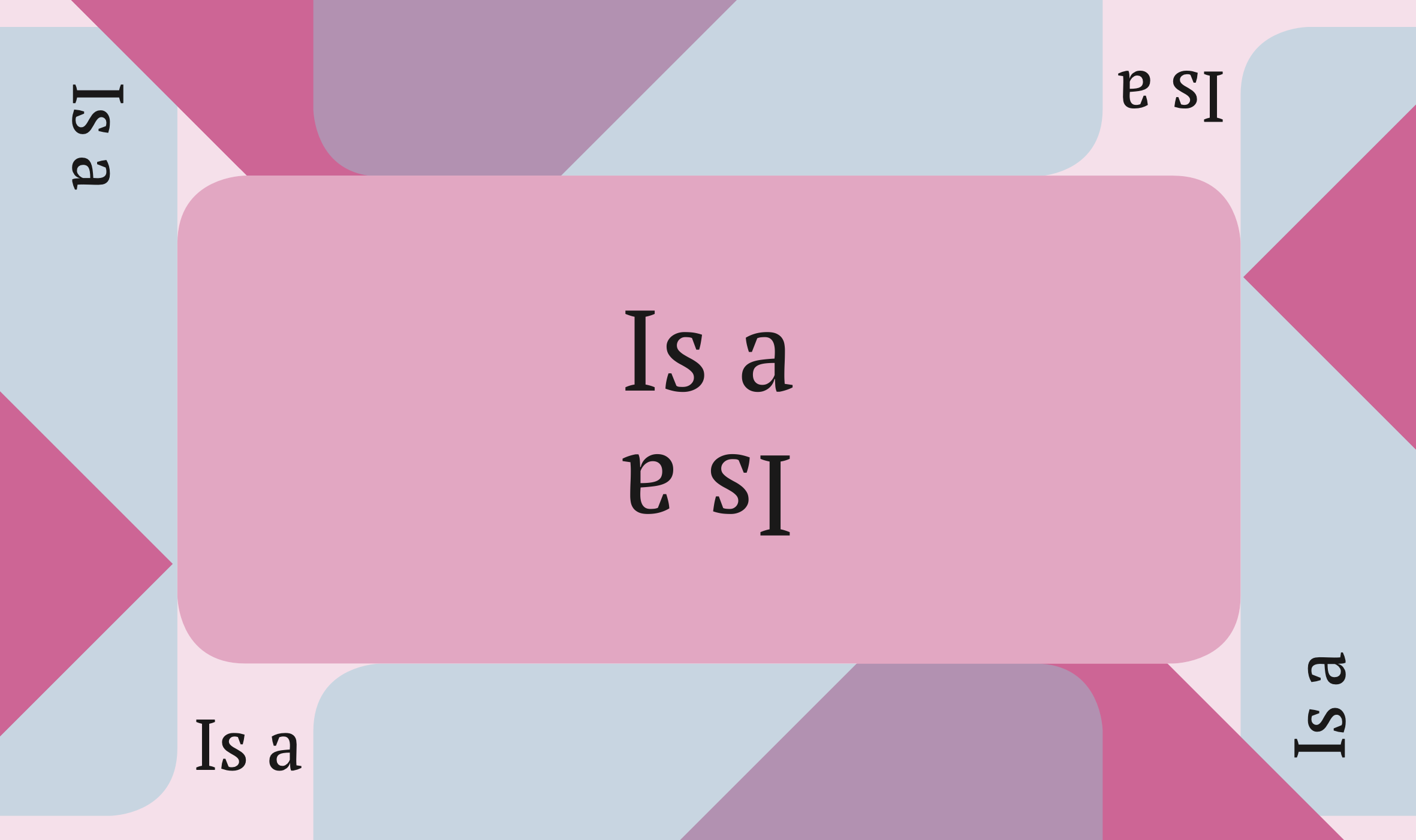
The Is A card is intended to create interest by combining unexpected things. For example, "the princess IS A dragon." In other words, it allows players to use nouns as adjectives. The design of the card is a combination of the design of the noun cards and the adjective cards - the "Is A" card is tucked under like an adjective and then has locations for tucking additional nouns under it like a noun card with questions.
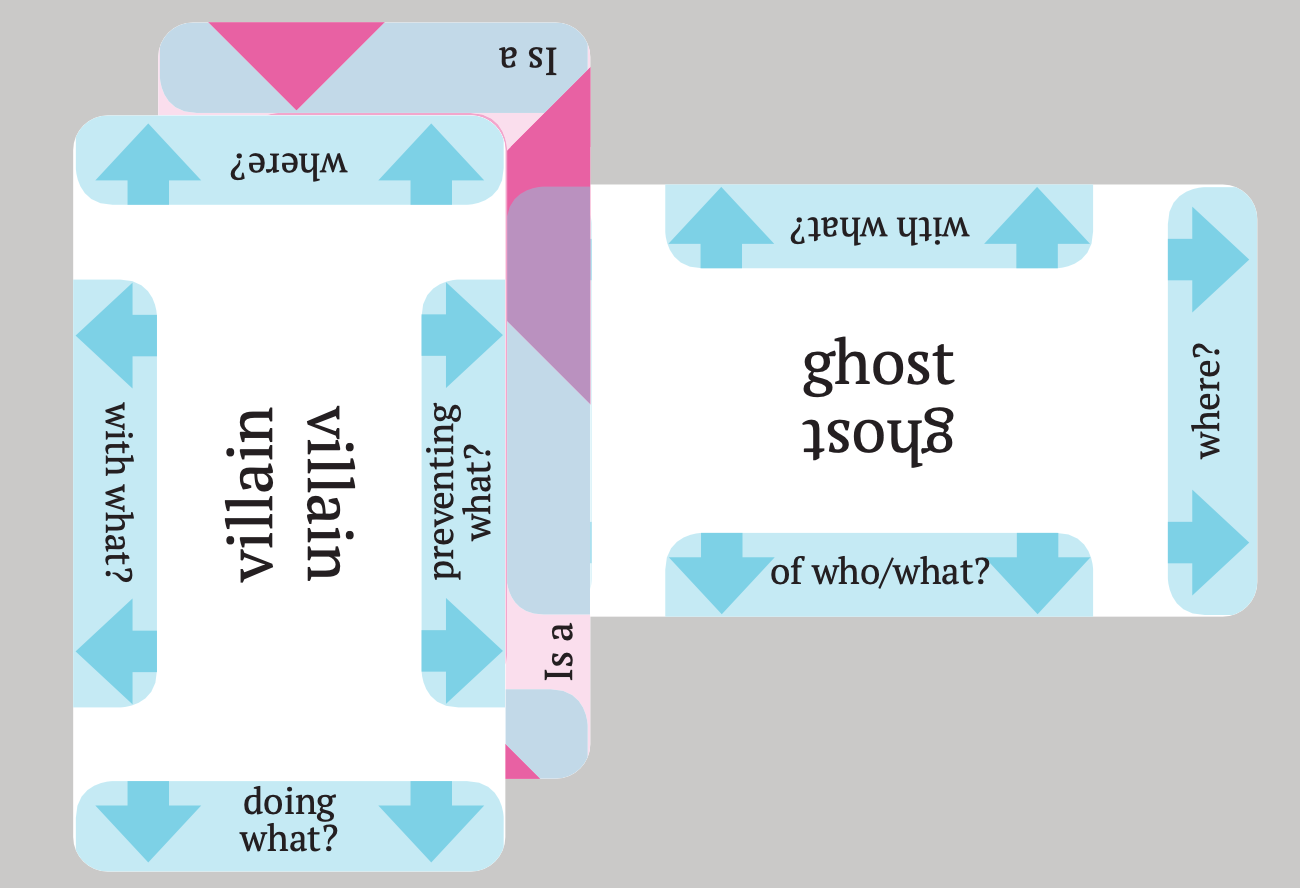
Despite this graphic design work to communicate my intended way to play this card, players often just tuck one end under one connected noun and the other under the other connected noun, as if it were a noun card similar to "The Past." I think if I make a future edition, I would print "Is A" that way to reduce confusion and rules complexity.
And
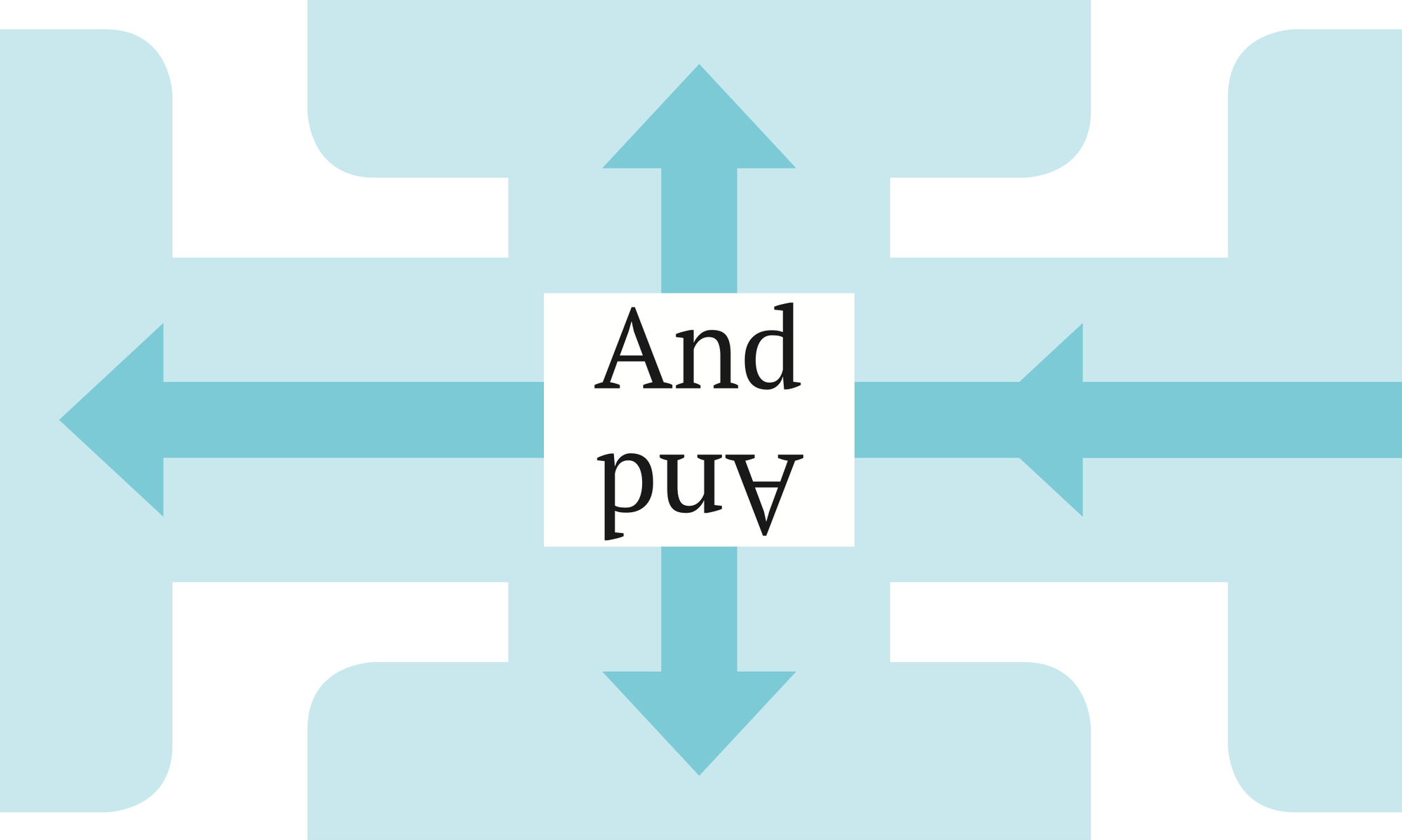
The "And" card acts as an extension on a question on a noun card to allow you to give a question multiple answers. It can be inserted in between two existing connected nouns, which can make for some pretty fun surprises later in the game - "the princess killed the dragon" can turn into "the princess killed the dragon and her grandma." I think it's pretty easy to understand and worth the extra rules complexity.
Action cards?
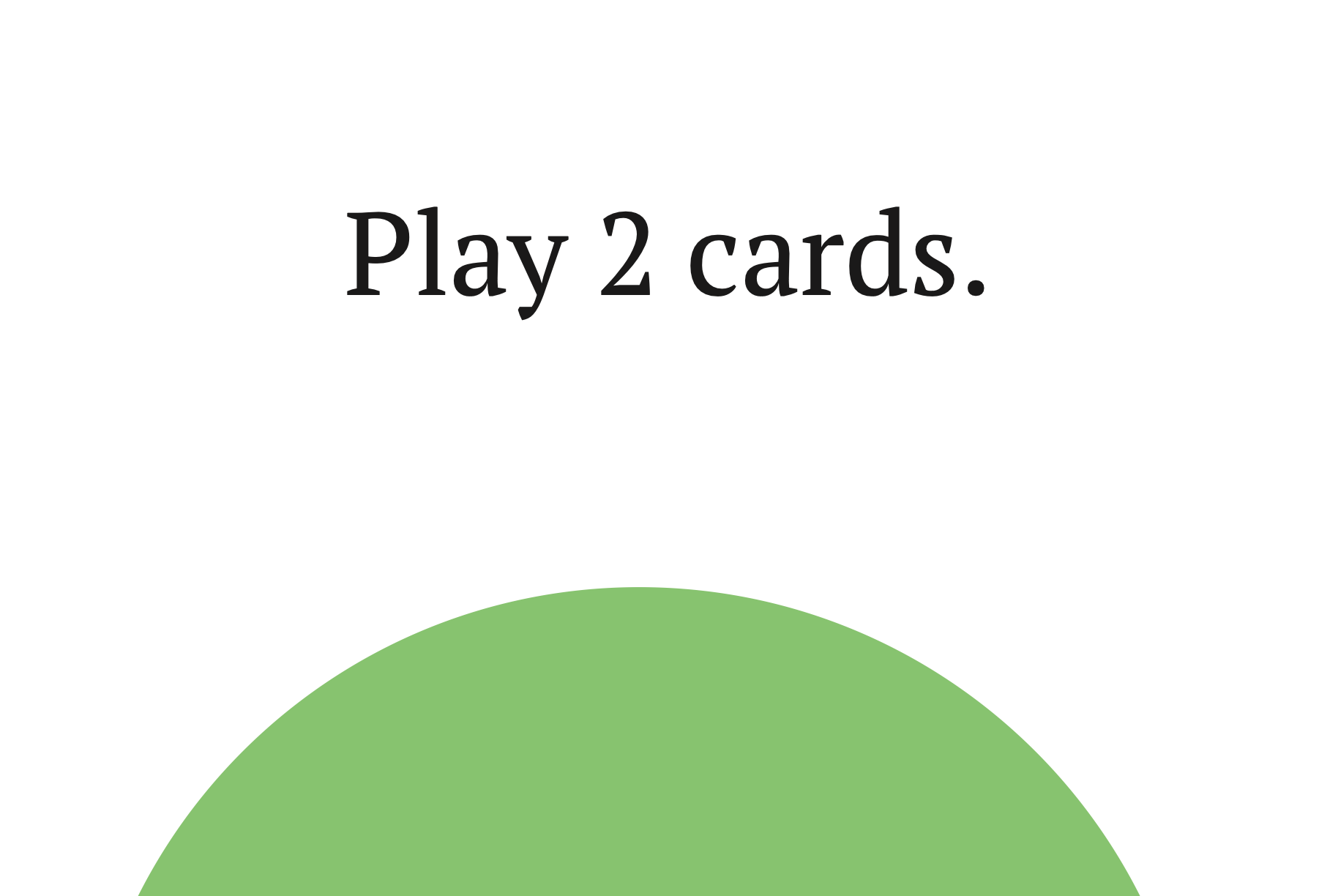
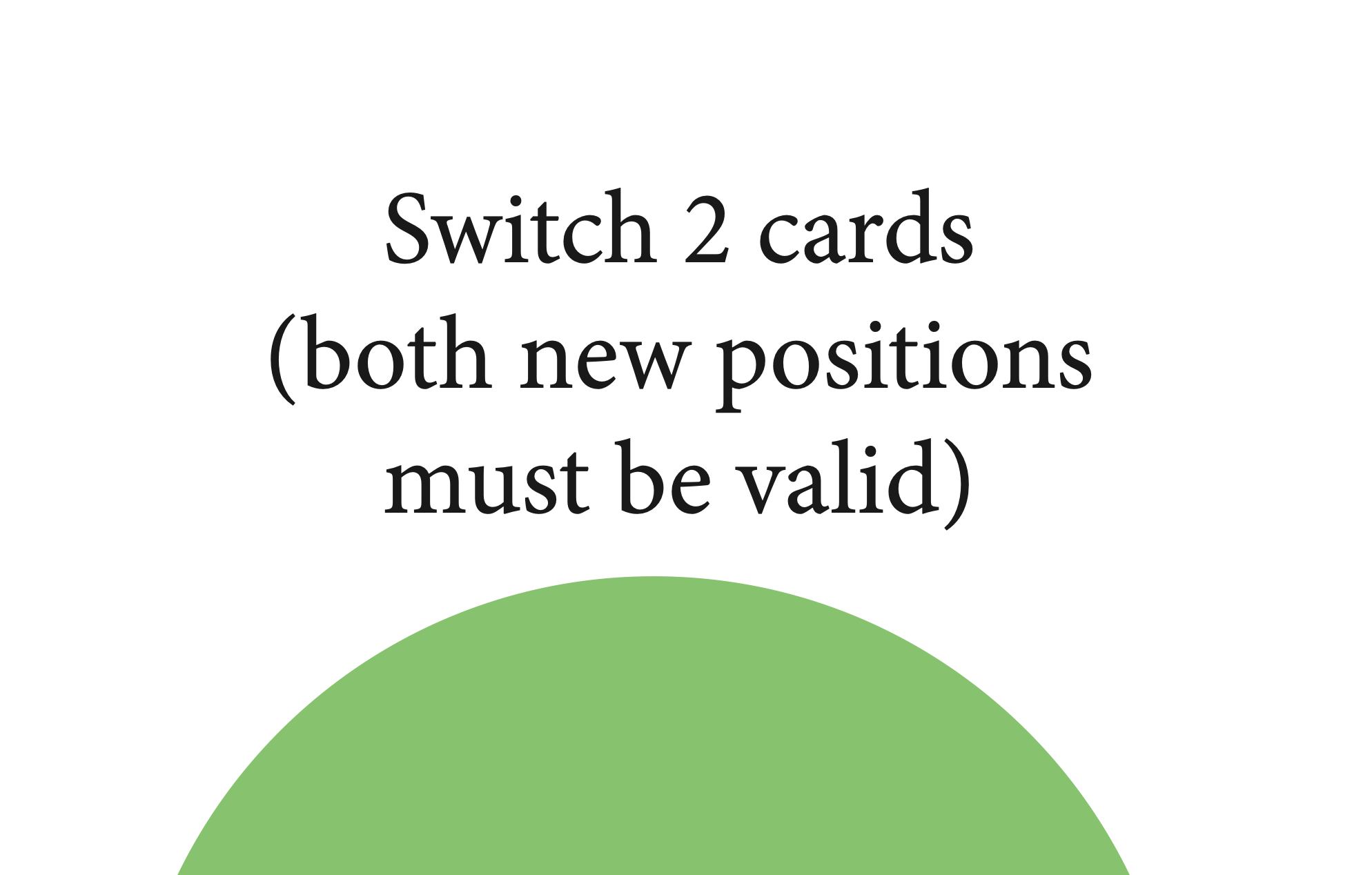
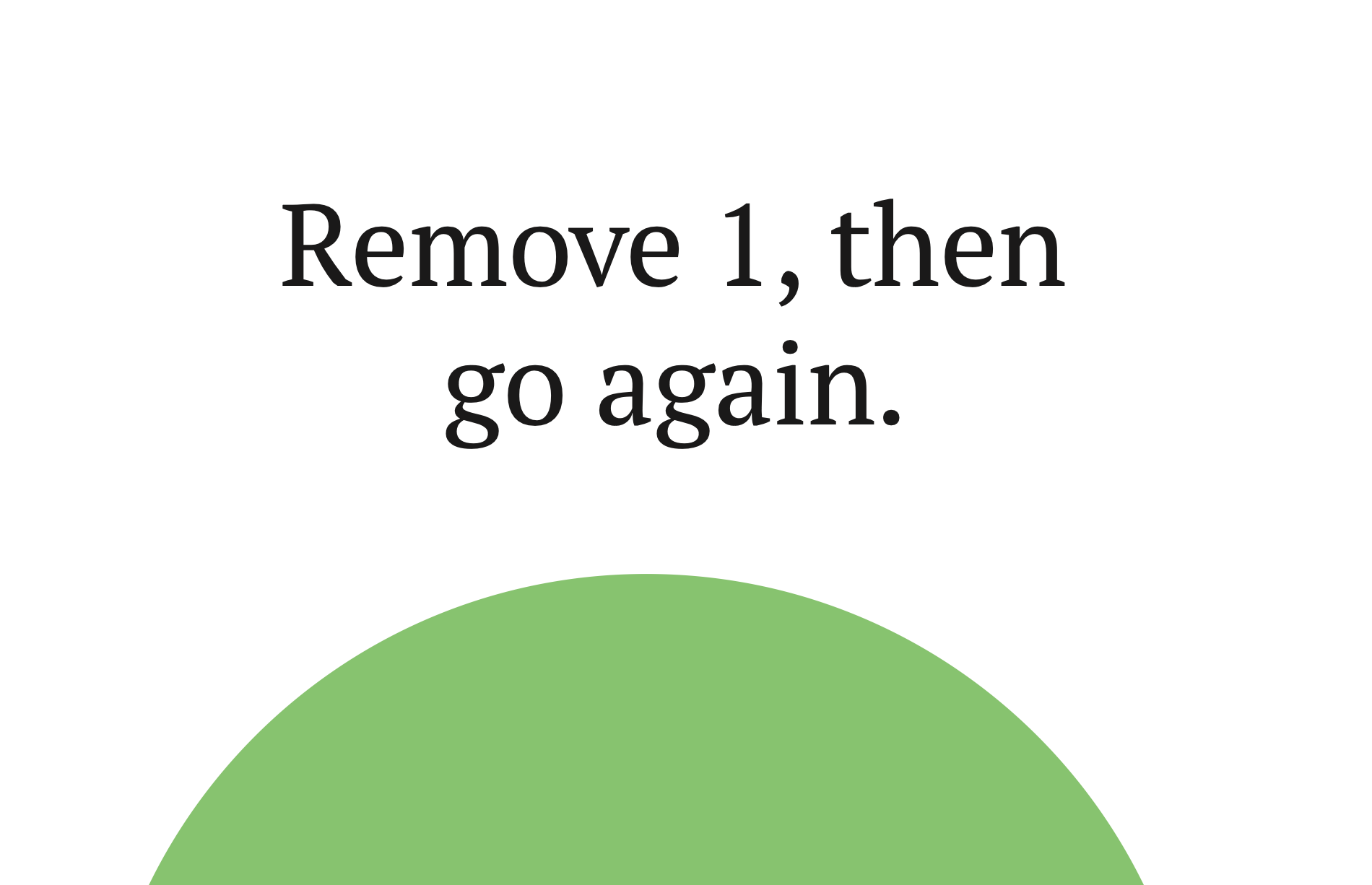
The three action cards in the early iterations of Situations
The first few iterations of Situations included action cards. These were cards that, rather than being added to the situation, simply had an immediate effect. I expected early on that players would have a somewhat adversarial relationship where each player had an idea in mind of where they wanted the situation to go, and so getting to play extra cards or mess with the cards that other people played would feel good because it would allow you to unexpectedly get the upper hand. Playtesting revealed that players feel quite cooperative during this phase! Nobody really felt that messing with other people's cards added much. I decided that the rules complexity of having an extra type of card wasn't worth the minimal extra benefit they brought.
The one place they live on is in the iconography - the green semicircle used on the action cards still exists on the cover and card back (a little easter egg, maybe).
I did have an idea of making an expansion pack designed to make the game more strategic and adversarial to appeal to a more traditional "gamer" crowd - players would have secret goals, like "write a sci-fi story" or "write a comedy." Shifting the situation more in line with your goals or away from what you think other players' goals are would then become meaningful, so I was imagining that this expansion would bring back the action cards. I never ended up doing the expansion packs that I promised Kickstarter backers (Sorry!!!) because of financial and logistical reasons - I'll explain more about that in a future post.
Next week's post will be about how I selected the words in the Situations deck.
Previous post: designing the structure of Situations